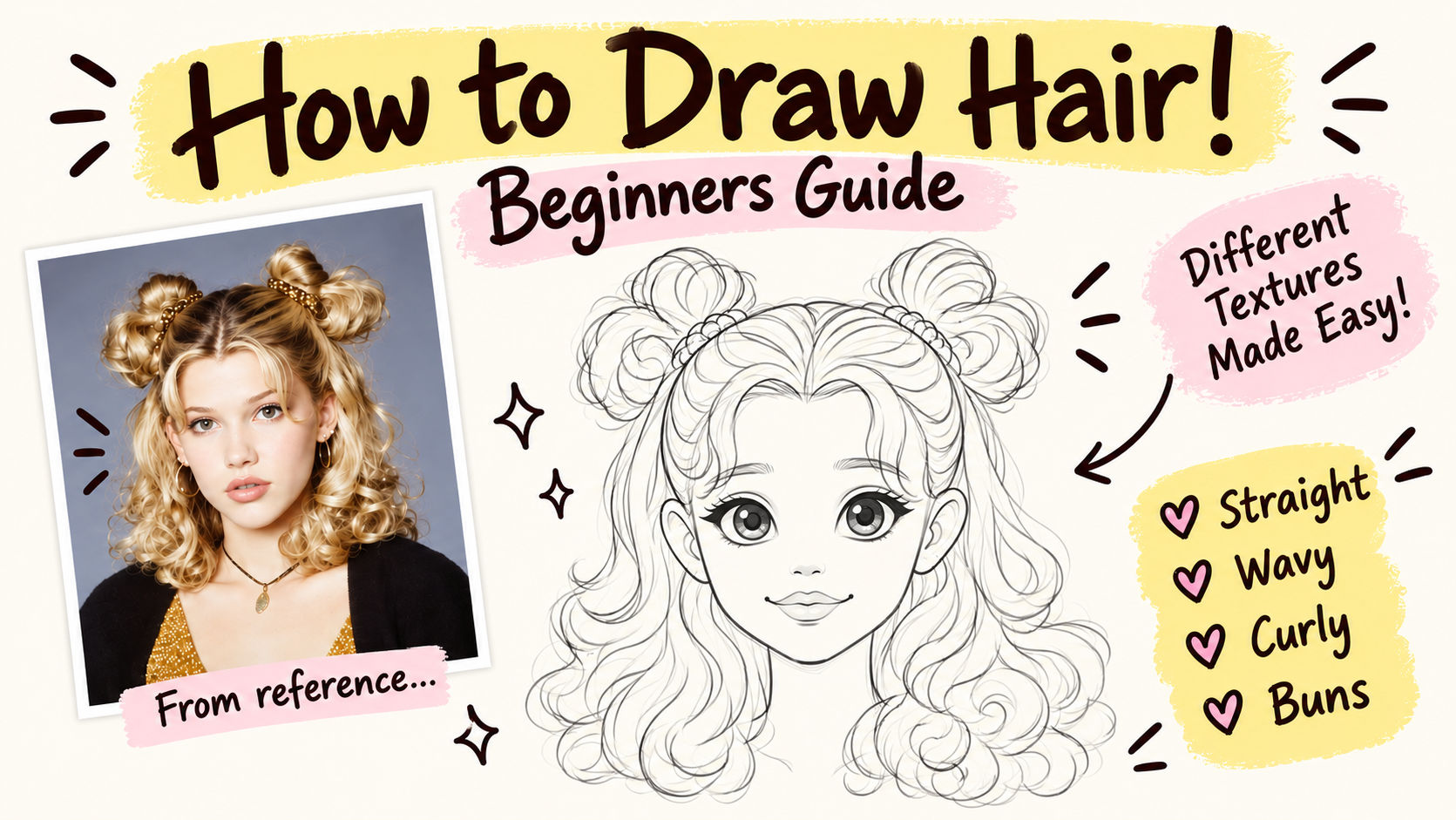
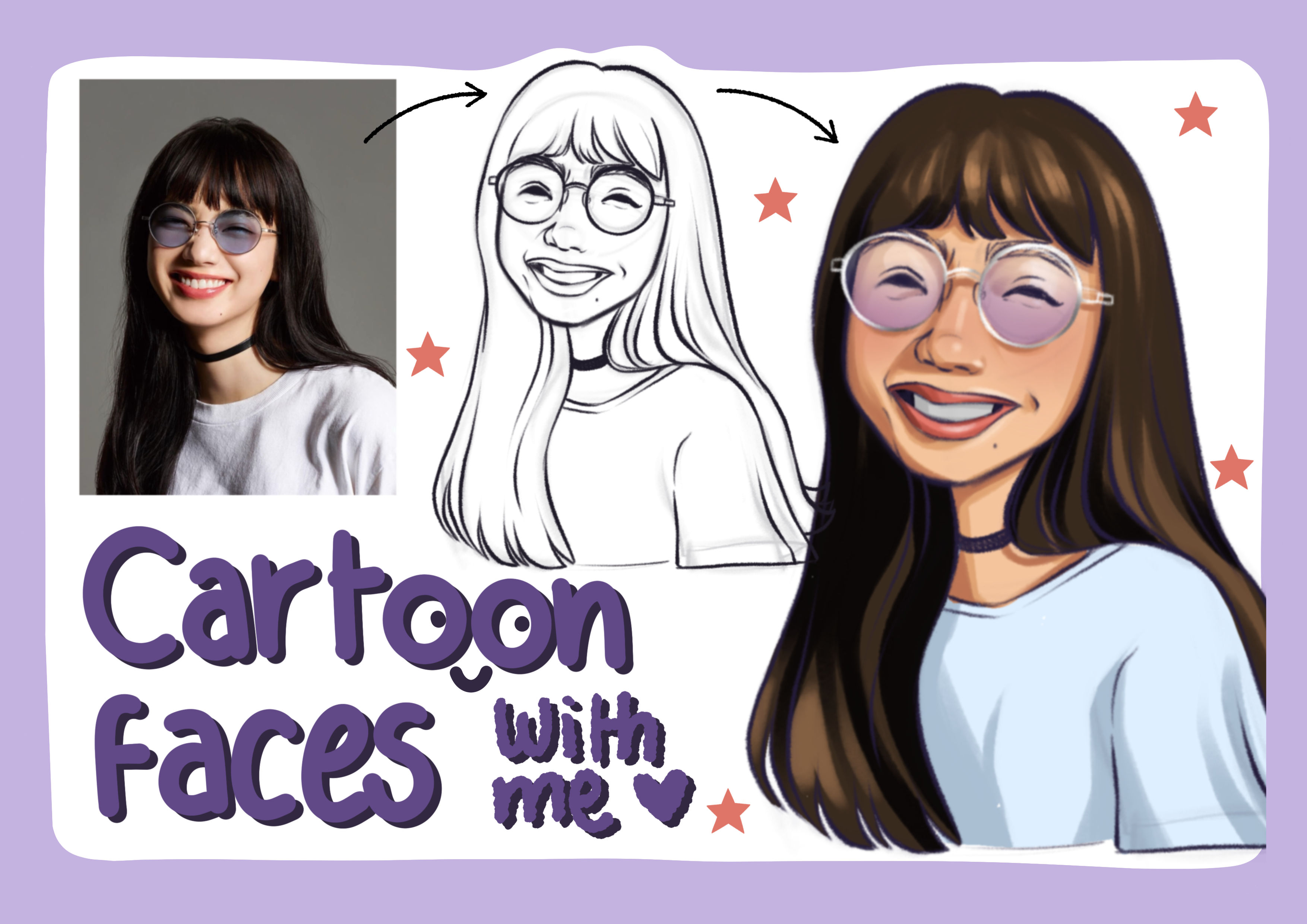
Hair often feels overwhelming to draw because our eyes want to capture every single strand. But great hair isn’t drawn line by line - it’s understood in large, simple shapes, volume, and rhythm. In this workshop, you’ll learn a straightforward framework to break down hair from any photo reference and turn it into a clean, finished illustration.
How the Workshop Is Structured
We start with the core fundamentals of how hair sits on the head, move through a complete start-to-finish drawing demo, and then explore how to handle different textures and styles:
1. Hair Structure & Flow
- Hairline & Growth: Understand where hair starts, how partings behave, and how it sits naturally on the skull.
- Volume & Silhouette: Block in the overall shape first instead of rushing into details.
- Rhythm & Direction: Avoid stiff, flat-looking hair by following its natural movement.
2. Drawing Hair from Start to Finish
- Chunking Over Strands: Break down the silhouette into large, manageable forms.
- Building Form: Layer in medium secondary shapes before placing any fine lines.
- Color & Lighting: Add base values, shadows, and subtle highlights where light actually hits.
- Intentional Details: Add individual stray strands only where they truly make an impact.
3. Textures & Tied Hairstyles
- Different Hair Types: Adapt the exact same process across straight, wavy, and curly hair.
- Buns, Ponytails & Braids: Learn how pulling, gathering, and tying hair alters its flow and tension.
Digital or Traditional: This process works seamlessly whether you draw on an iPad with Procreate, any digital software, or with a simple pencil and sketchbook.
By the end of this session, you won’t have to guess where to begin. You’ll have a reliable, repeatable process to draw natural, dimensional hair for any character or portrait reference with confidence.